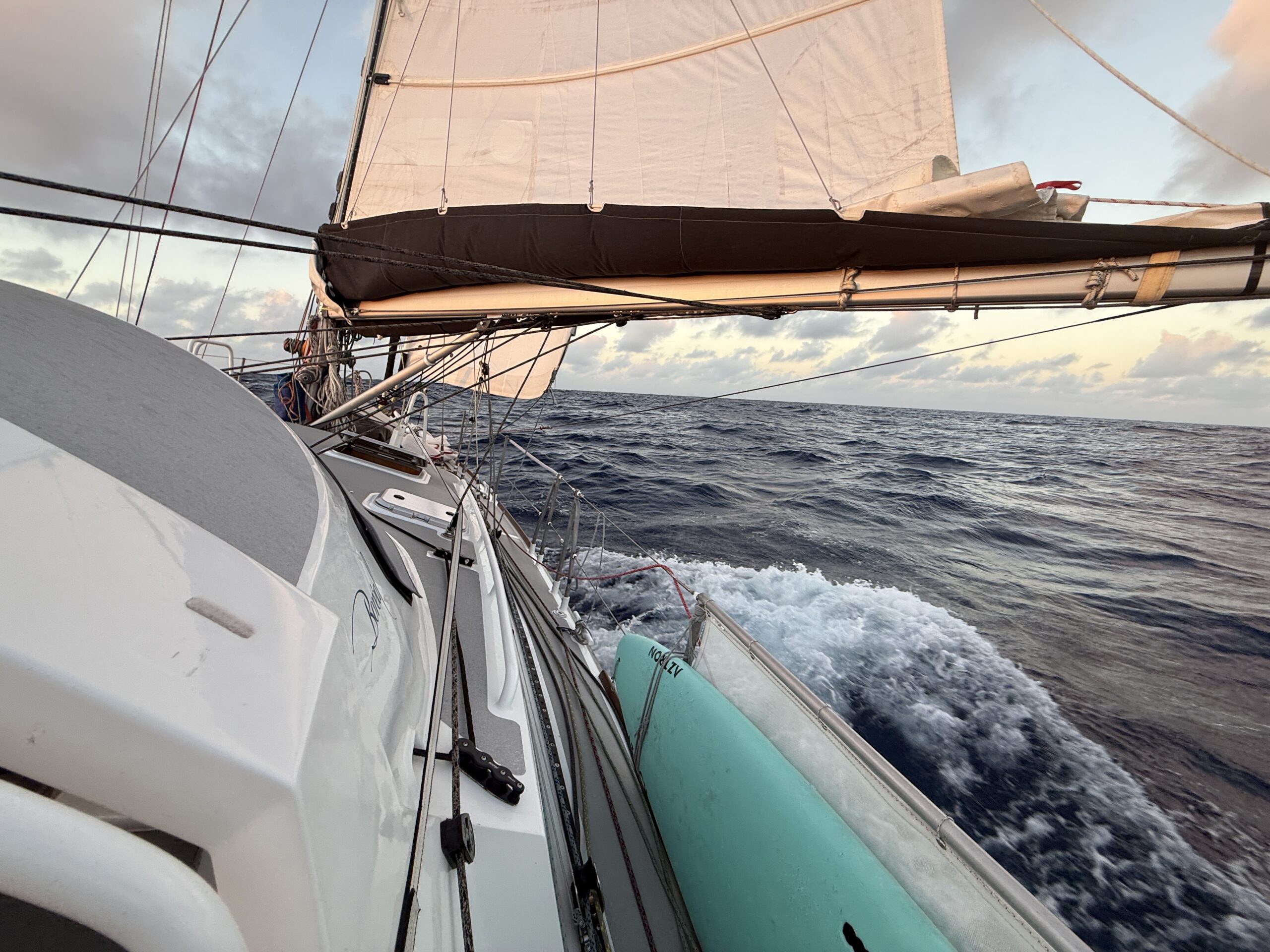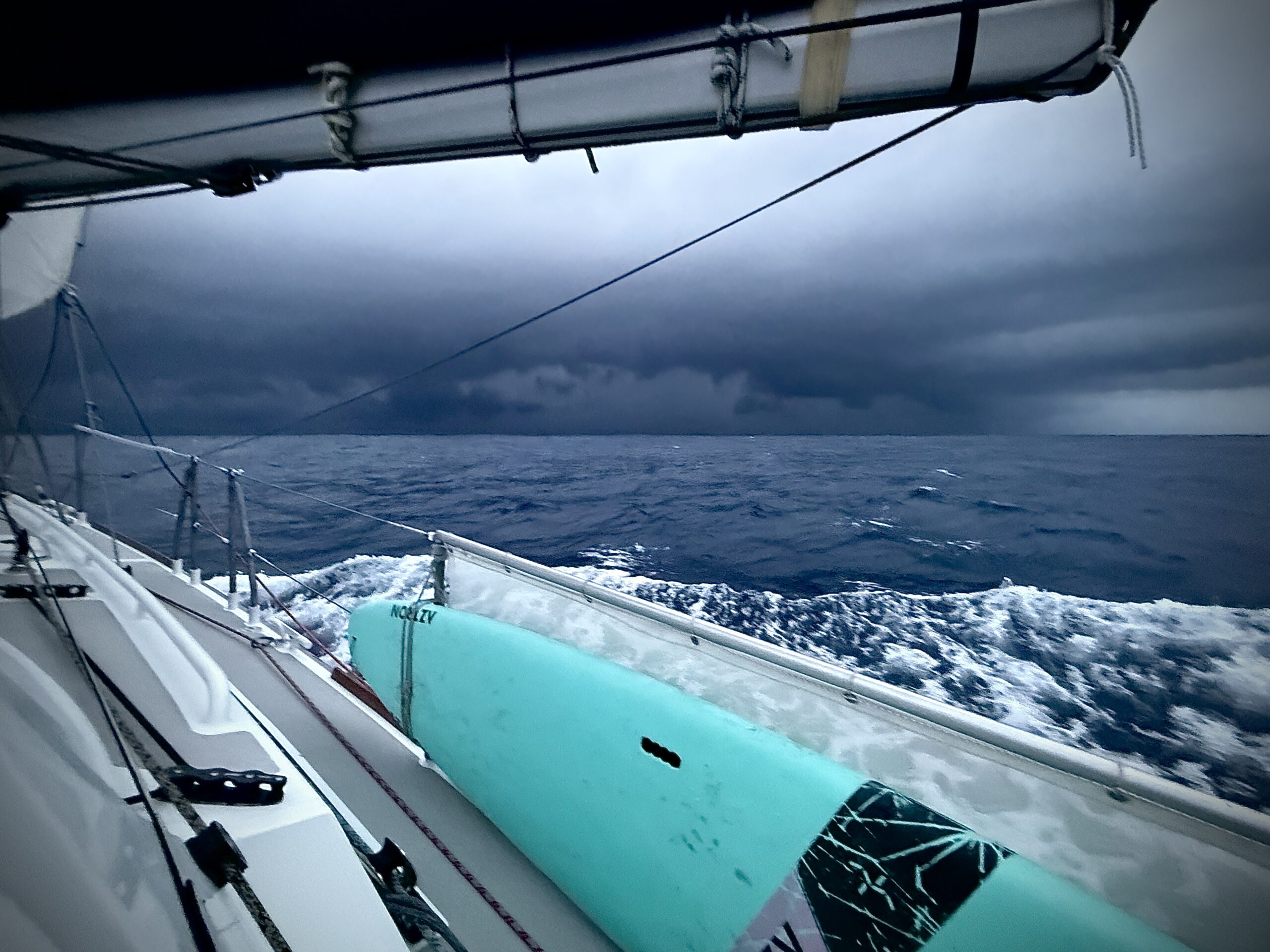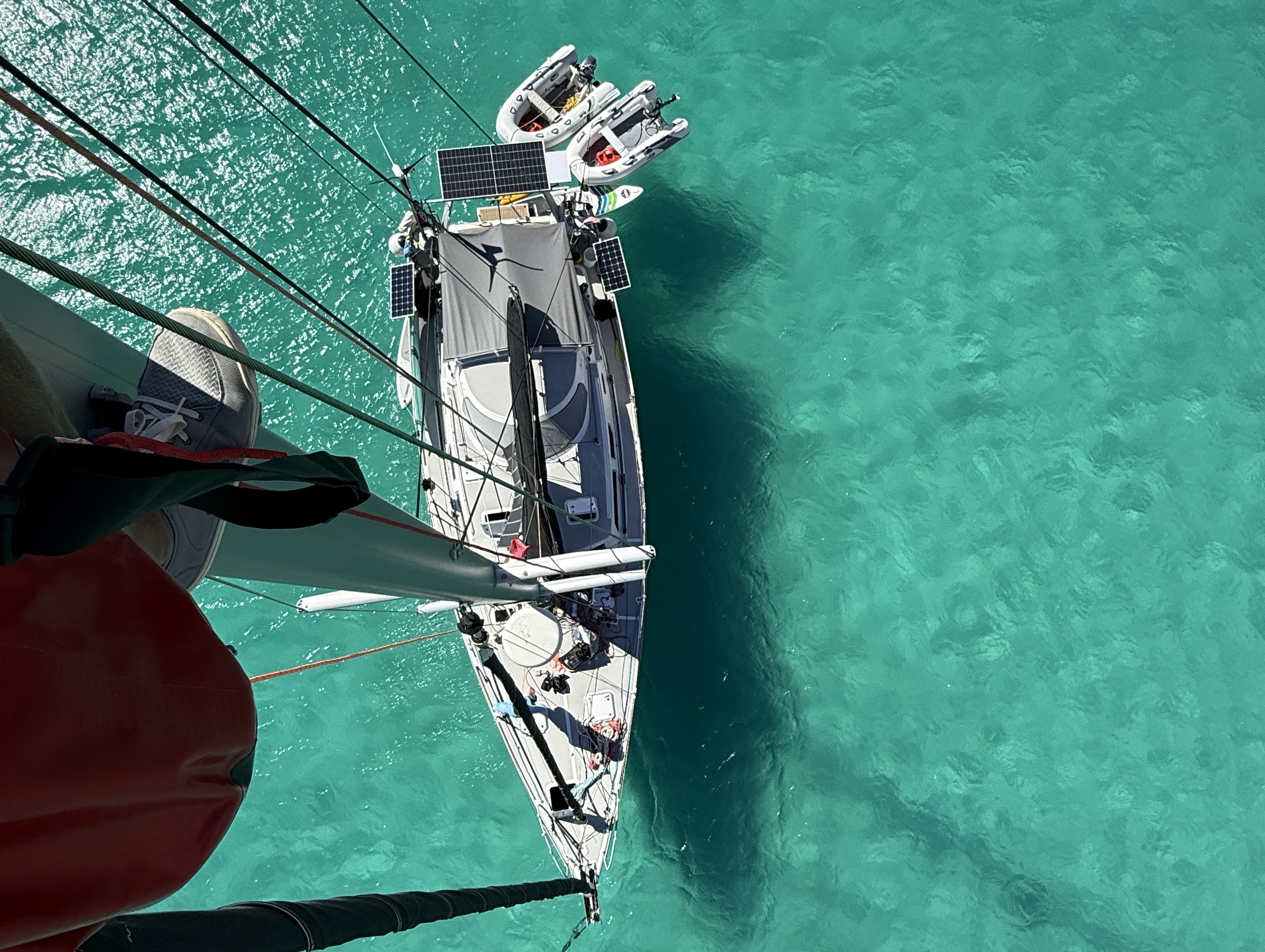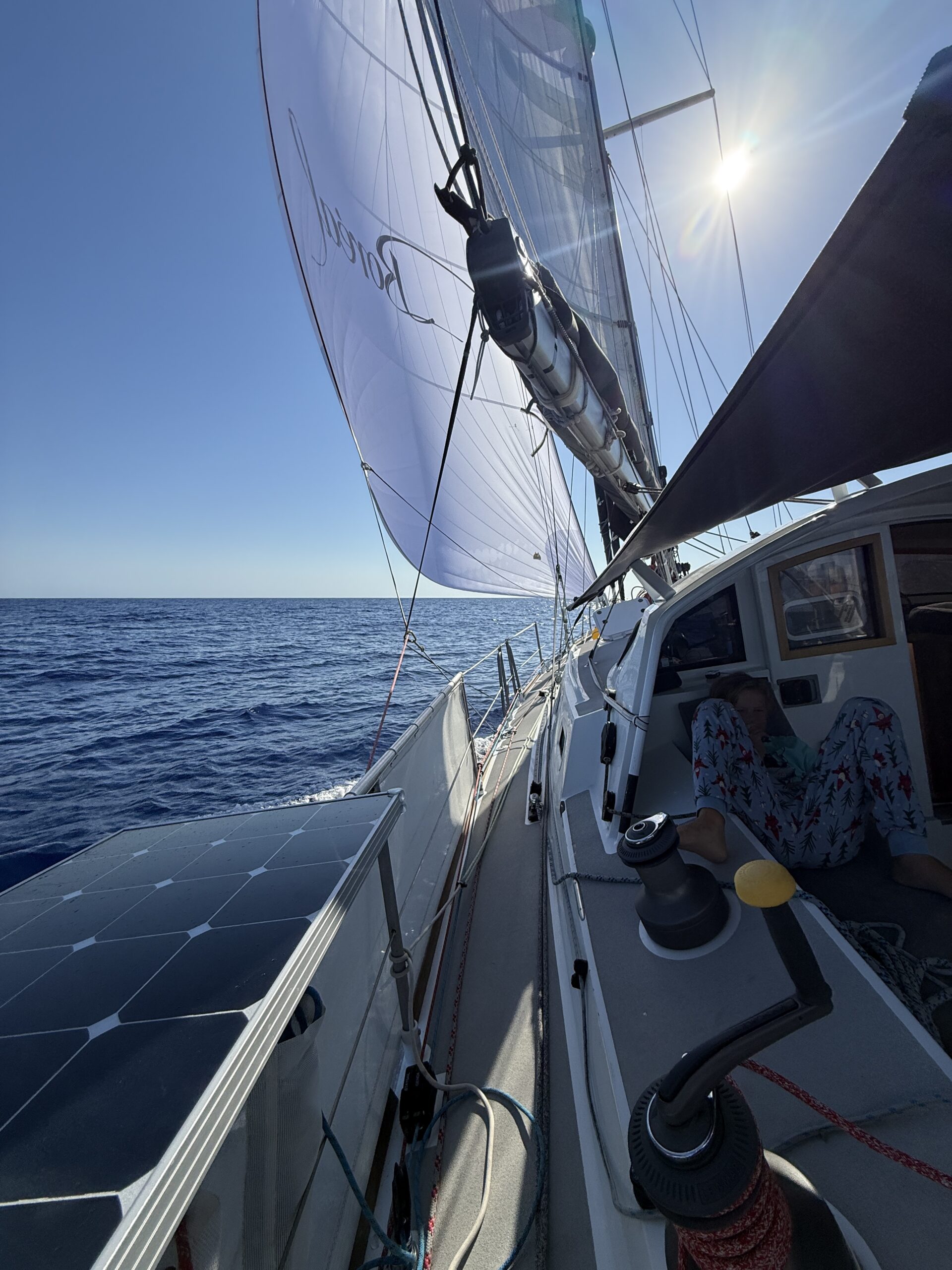
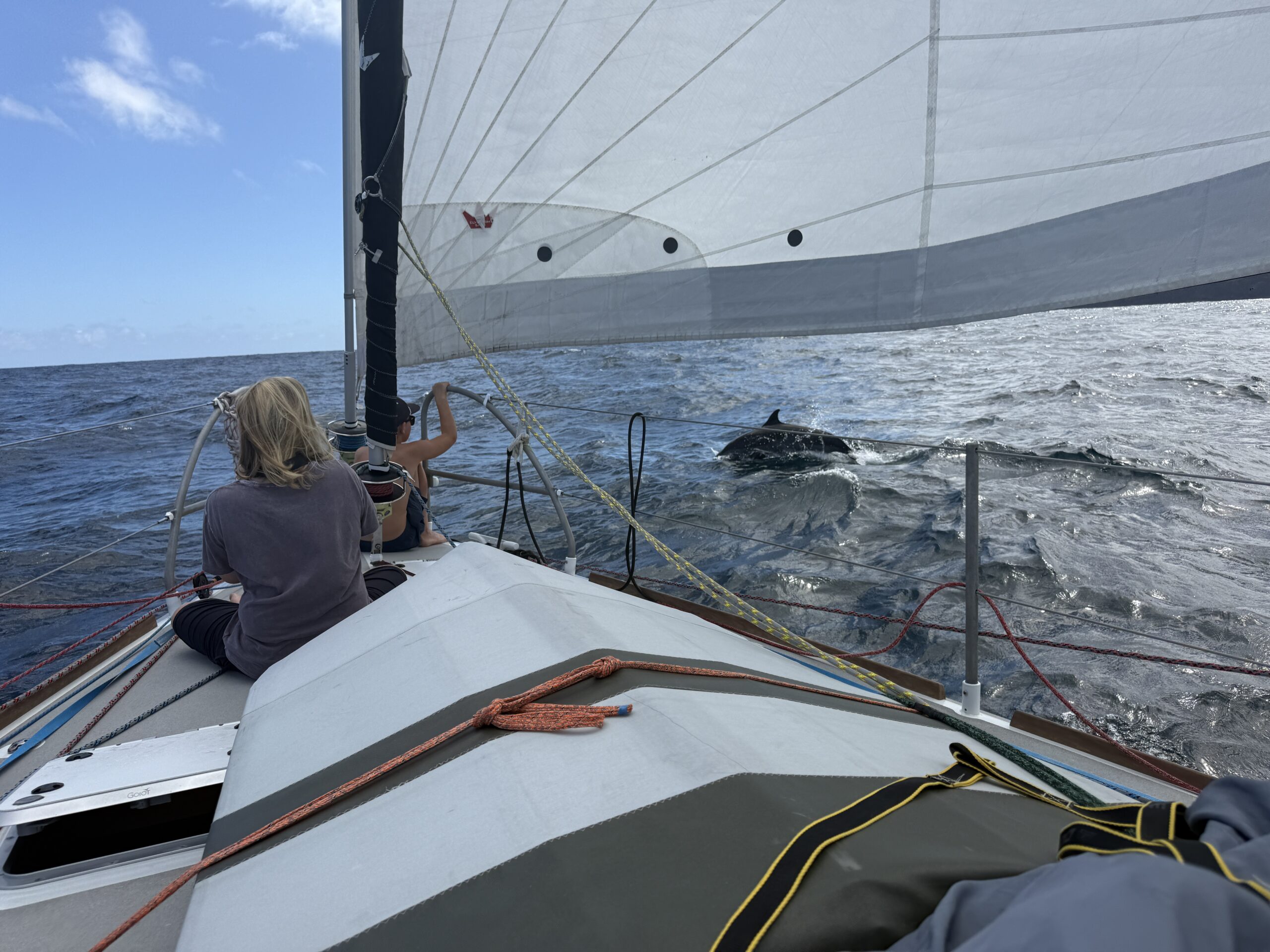
27 Feb 19:50 ship’s time – 680nm SW of Cabo San Lucas— As I write we have succumbed to the calm and are motoring again. We’re moving along at almost 6kn with a very light northeasterly breeze behind us. We’ve had a tough and very light wind couple of days here, sticking to sailing through all of it. Conditions were decent at times, and downright miserable at others. Last night, starting just around dinner time, the sea state decided to get really ugly. It felt like we were bobbing in a bathtub full of gigantic toddlers.
The commotion was so bad that despite the decent 12-15kn of breeze we had, the boat could hardly get moving through the friction of the disorganized waves. We stuck to our sails though, knowing that sailing was still possible, just slow and challenging. The motion in the cabin was so violent it was hard to even walk around, even with two hands on holds nearby. The seas finally abated by the early hours of the morning, and we kept sailing all day with a light northeasterly. It wasn’t until late afternoon today that we threw in the towel again and fired up the engine. Not a bad effort from the Flyer crew!
With the quiet, light sailing today we were able to get through a few lingering maintenance items and boat chores. I spent an hour re-shimming the companionway door latch. I guess over the past few years the soft steel catch has been worn down and it wouldn’t hold when the boat flexed, and the bomb-proof aluminum door would swing wildly open as the boat heeled and slam against the opposite open side. Nice to have that one done!
We also discovered today that with the significant increase in humidity out at sea, our freezing plates in our small refrigerator had iced-up much quicker than ever before. I discovered almost a full inch of ice coating the plates, which really reduces the efficiency of the refrigerator, something we care a lot about with our limited electrical energy aboard.
As I usually do, I collected the icy chunks into a bucket and gave them to the boys to play with. This time they thought it would be best put to use cooling the ocean, so they threw blocks of ice into the big blue around us yelling “we’re trying to slow global warming!”
Trying to slow global warming, one ice-cube at a time.
We’re also using this engine time to make more water, and take advantage of the warm water we’re getting. Showers were had again, by most of us, and I took the opportunity to wash the salt off of our cabin house windows and port lights, as well as hose some more dried Mahi blood off of the cockpit floor with hot water. That stuff is pretty sticky, I have a feeling we’ll still be seeing remnants of that fish many months from now!
As of 3:15p today, it’s been a week for us on this journey. Hard to believe, honestly, since it doesn’t feel that long to us right now. Unfortunately though, as you can probably tell, this week has been much slower than we’d hoped. We’ve covered 893 nautical miles in that time, which averages out to 127nm per day. Okay I suppose for a heavily laden 44’ boat, but a bit of a bummer to know we’ve also run the engine for 31.5 hours.
Speaking of the engine, I think we have enough fuel aboard to power at a modest RPM for 160 hours. Conservatively, we really should only use 2/3rds of that. Converting that to miles, we’ve been budgeting around 600nm, or just over 100 hours of motoring at around 5.25kn. 600nm is 1/5th of the journey, which very well could have a lot more dead calm for us to deal with, and we’re really hoping to save our fuel for when we’ll need it the most!
Even though it’s been a slow passage so far, we’re still really lucky we left when we did. The large ridge of high pressure that’s been chasing us since we rounded Baja 6 days ago looks like it’s settling in for quite a while, so any further delay in our departure would have probably meant waiting in Mexico for a better weather window… probably more that 2 weeks later!
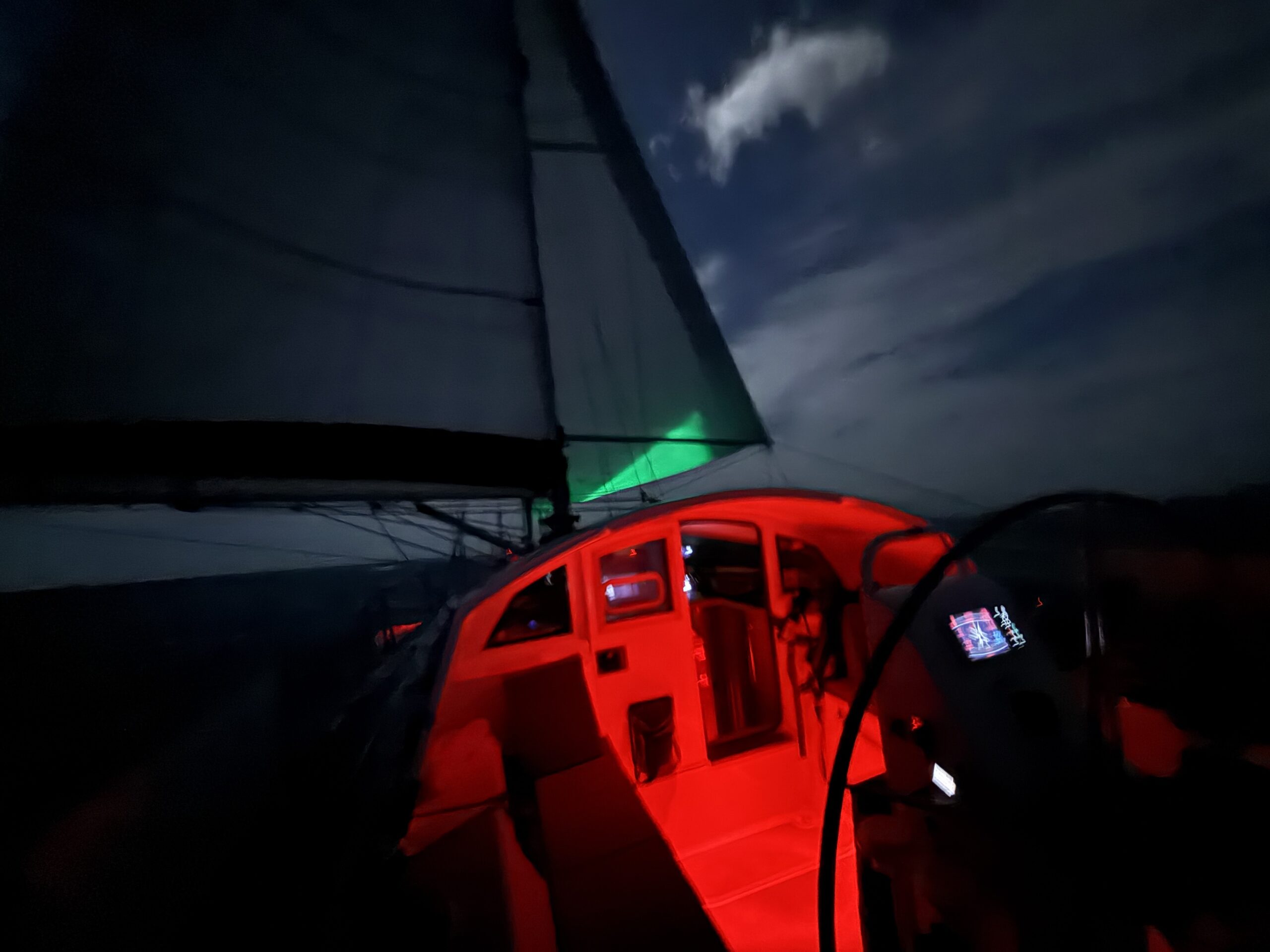
We just finished our taco dinner tonight (man we miss the real deal back in Mexico!), and the boys and Kristen are fixing to watch some more episodes of the Office while I stand watch on my early evening shift. Kristen just revealed a surprise cake, that she’s calling the “One-Week Cake,” in honor of this most momentous occasion. There’s a beautiful waxing gibbous moon out and it’s already pretty bright. I’m looking forward to another nice evening out here on the Pacific, even if we are motoring.
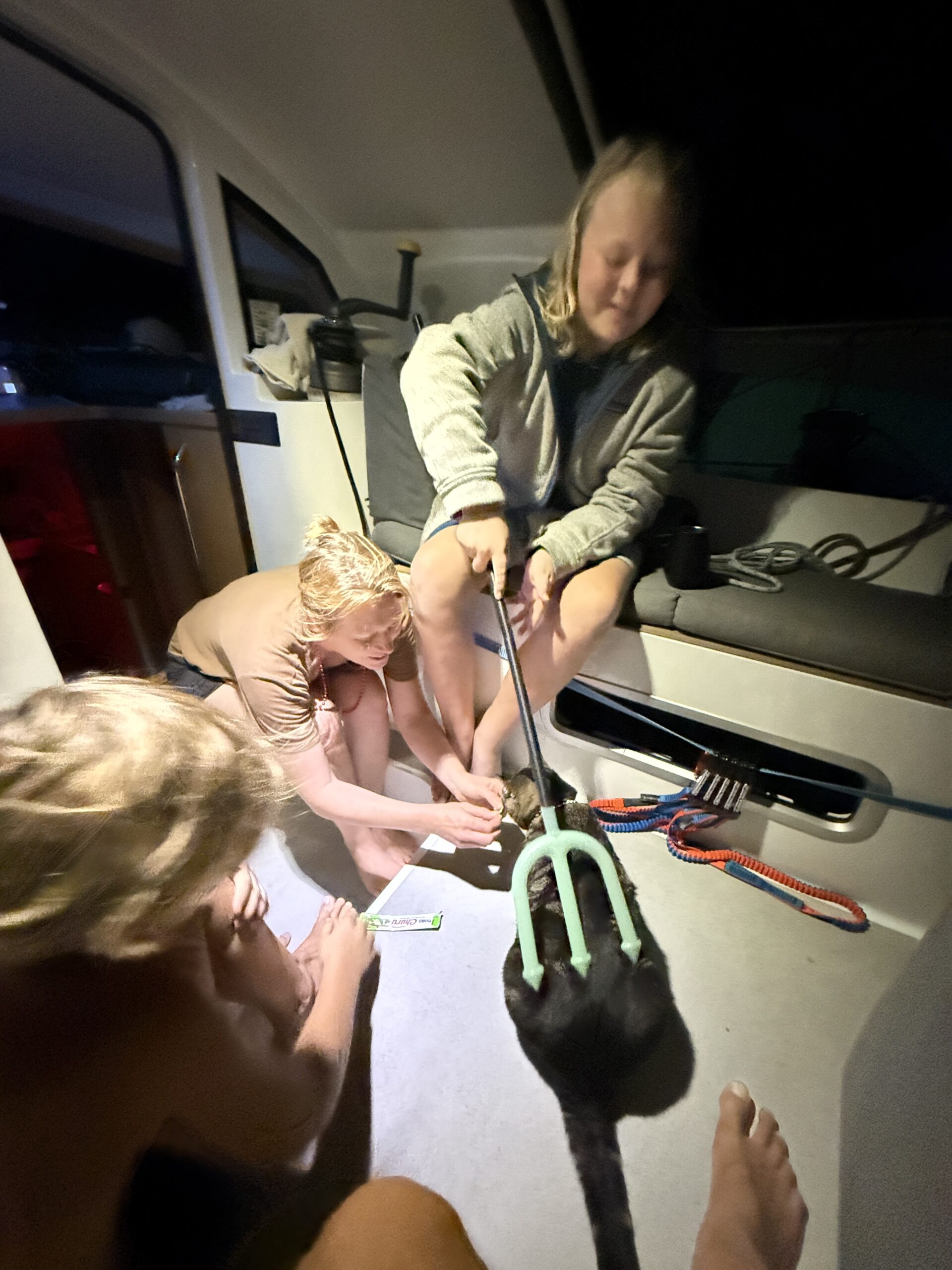
Kristen re-racking the fridge after defrosting. James is seen here in the background working hard to keep Pelle pleased.Pelle enjoys helping with chores too, such as holding my multimeter and manuals down so they don’t fly off the bench when the boat rolls. Paul enjoys doing his online school time in the cockpit on nice sailing days like yesterday 2/26Kristen’s “One-Week Cake” for dessert tonight…mmmmm
25 Feb 1430 ships time – Somewhere west of Clarion Island.*
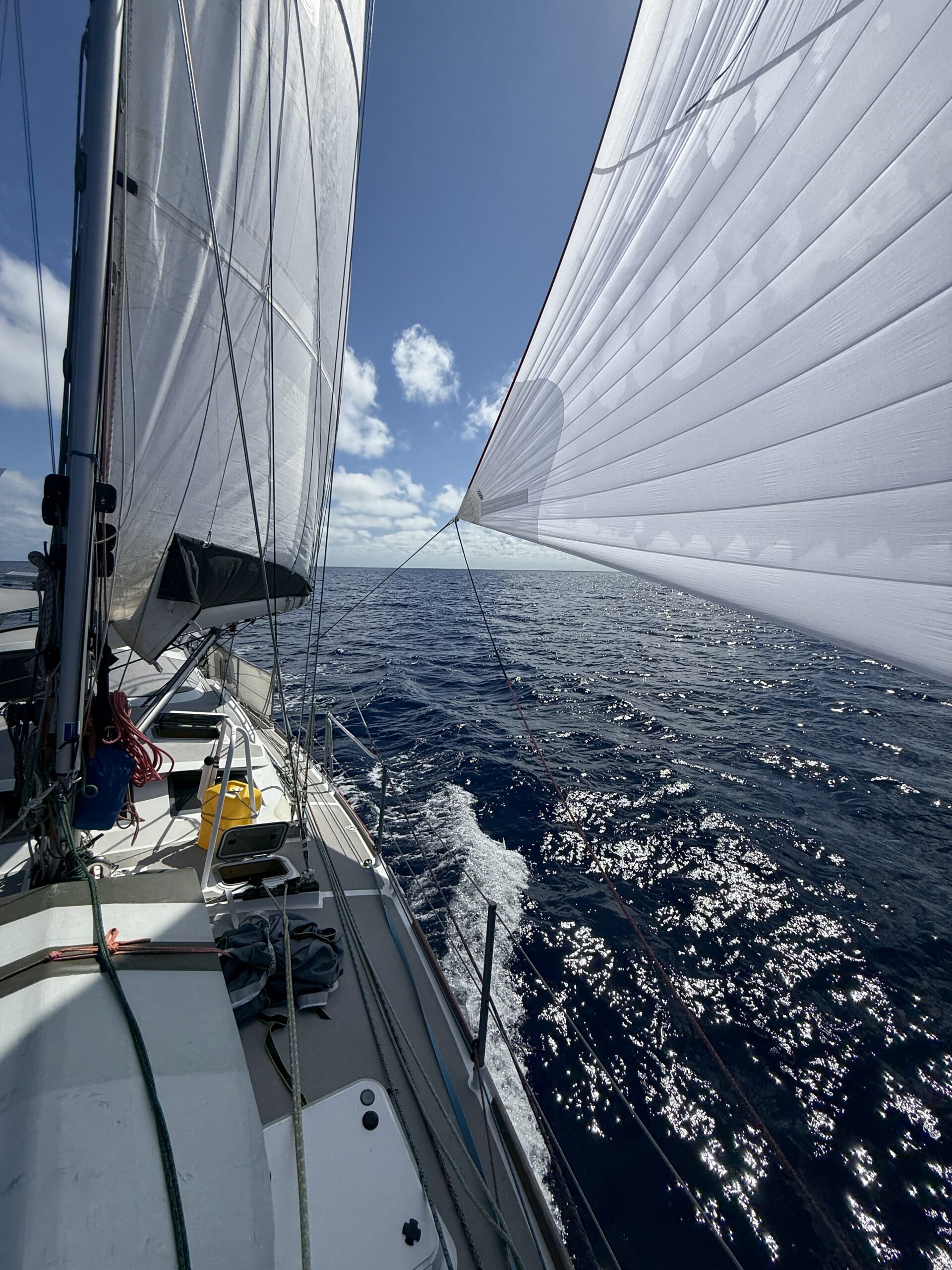
We’ve been really lucky to have this northerly breeze continue at a higher velocity than forecasted. We only had one very light spell in the middle of the night last night and motored for about 3 1/2 hours. Kristen was below asleep when the breeze piped up to about 6 kn I promptly set the A3 again and we were off sailing. We’ve been sailing ever since the breeze has built since the early hours of the morning and we saw as much as 15 kn today around 11 AM ships time.
I was texting with Kevin aboard Dark Star (45nm behind us) this morning about how we are getting our boats to move better. It sounded like he had gotten his wind vane going nicely, but no success yet with a larger reaching or downwind sail. So he persuaded me to give our Windpilot another go and I convinced him to give that an asymmetrical spinnaker a second chance. He sent me a picture of his big-ass sail up a few hours later and seemed pleased with the results!
On Flyer, our Windpilot proved tricky at a beam reach today. I think I need to adjust one of the servos in it so it can be more sensitive turning to port (it seems happy turning to starboard even with our mainsail luffing.) I’m also concerned that our solar arch creates a lot of turbulence for the wind vane element and makes it hard for it to be as responsive as it needs to be with the wind at this angle. We know other virtually identical Bóreals who are able to make them work well so it’s gotta be possible, right? I did get it going nicely for 10 to 15 minutes at a time this afternoon. I’ll give it another shot tomorrow.
I rain in the water maker again today and finding our TDS (total dissolved solids) levels lower, which is nice to see. We’re getting readings of about 200ppm (parts per million) today.** Maybe the answer is more frequent use!
Kristen and I regrouped today and confirmed that we’re doing OK with our four on, four off watch schedule. What it means is I have two 4 hour shifts at night and she has two 4 hour shifts during the day. (and of course that means we each have one 4 hour shift at the other half of the day.) Four hour shifts are nice because they give you time to get settled before going to sleep and some wiggle room in case you have trouble falling asleep, etc. Kristen says she’s getting enough rest but shes feeling a little under the weather with a minor cold right now.
I’m not sure if I’m getting enough rest. I seem to have contracted a splitting headache today, but I’m slowly figuring out how to do cat naps on my night watches which is nice to get a little bit more shut-eye during the dark hours. I’m not sure the two are related, but it would be good to have more motivation to get more sleep.
To be honest, my biggest fear is that sometime in the next few days one of us might contract dengue fever! We know it was going around in La Paz and really hope that we have escaped it. It has a 10 day incubation period… so here’s to continued decent health until at least March 2!
I took a shower last night on the deck after dark, and although it was hard to stand upright in the mild seas, it felt really good to be clean again! I think everyone else will probably shower in the next day or so while we have hot water from all that motoring. (We have a hot water tank that uses heat from the engine cooling loop to warm the water… depending on how much we use it can last up to three or four days).
Kristen made boat pizza last night and it was excellent. It’s basically a sheet pan pizza with lots of olive oil in it to help make the crust crunchy and she’s been making it on the boat for the last three or so years. It’s always a hit. We also had a salad. I wonder what we’ll have for dinner tonight?
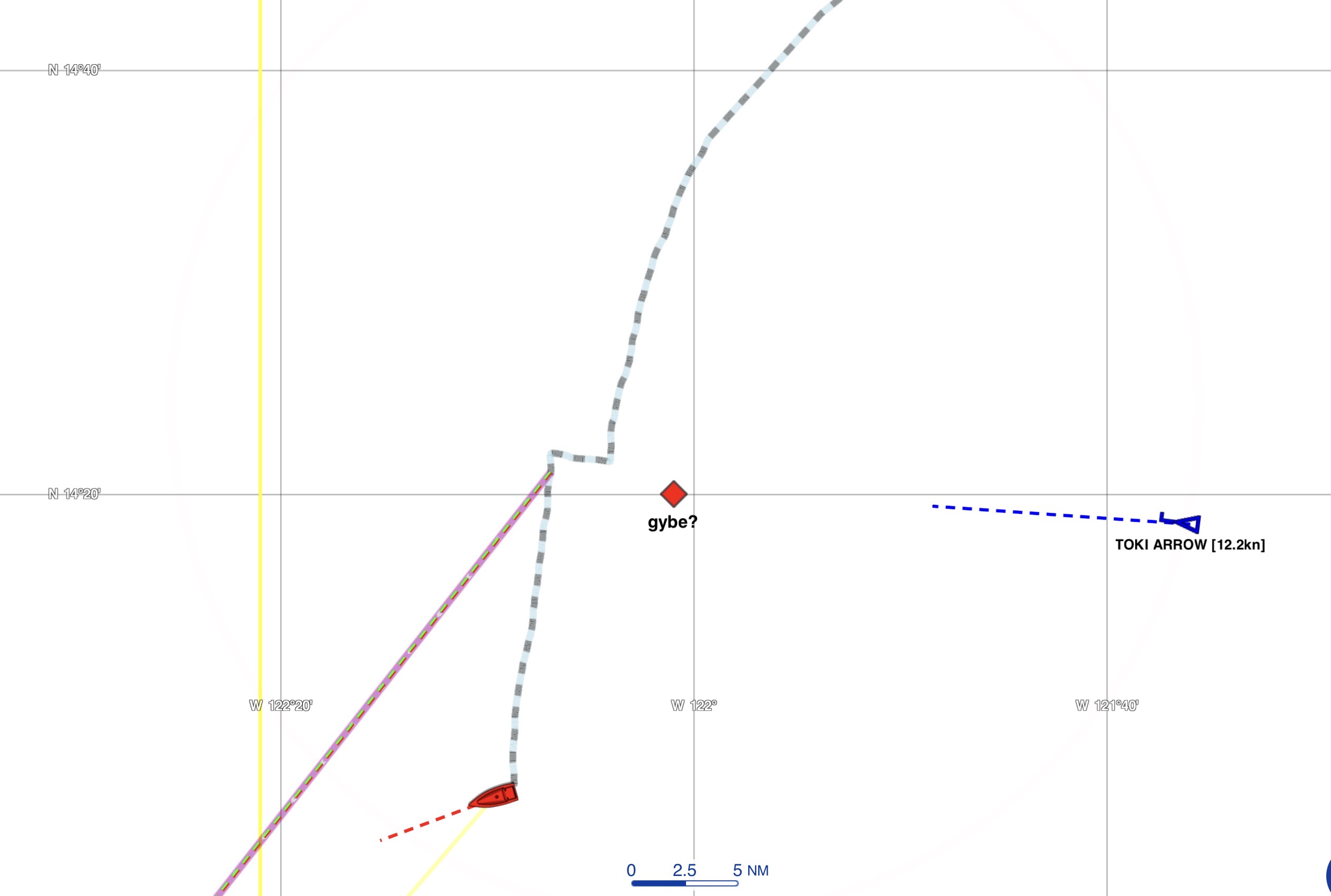
We’re continuing to sail a bit north of rhumb line and it looks like that’s probably still a wise idea. Given the latest GRIB files things seem to be looking a little bit better for the next few days than they were in previous forecasts earlier today and yesterday. The latest model run shows the breeze will be building tomorrow during the day with a couple minor dips in velocity, but generally it looks like it will be building to the midteens over the next five days! Most model runs show no motoring time for us over the next several days (a threshold I set in our routing software at a depressing minimum sailing speed of one and a half knots). Hallelujah!
James continues his pattern of being the first one awake every morning and it’s so nice to see him come up on deck before the sun rises. The sunrises out here are pretty special and it’s nice to have someone to share them with. Pelle continues to be interested in coming on deck only when it’s dark out and bouncy! No Bueno Gato! as Kevin said. Paul continues to put lures out during the day but no bites in the last two days unfortunately. It would be nice to get another yellowfin to eat soon.
She looks a little grumpy here, but we’re pretty sure Pelle has been enjoying life at sea so far.Reaching along with the A3 up. Much to our disappointment we’ve found very few flying fish and squid on deck in the mornings lately. This is a trend we hope reverses itself very soon.Moon-set sometime around 3am, ship’s time. The iPhone’s low-light photography is impressive.
* A note about these recent posts – I’ve gotten lazy and have been voice-dictating them to my phone when I get off watch in the afternoons. I’m a bit delayed in posting so this is almost a full 24hrs behind. Also, for some reason, the Apple Journal app likes to make some mistakes for me so some words don’t get transcribed well, and I’m not sharp enough right now to catch them all. Also, Journal also likes to make hyperlinks to random crap, and I’ve not yet caught onto that fully, so apologies for that garbage. Finally, WordPress has the most horrendous UI on an iPad, so we are constantly having challenges editing text (which seems like a pretty basic functionality they should have figured out). Apologies for the messiness but it seems the easiest way to share a bit of this adventure with you all every day.
** The World Health Organization has set a standard that anything below 500ppm is considered drinking water, so we have a bit of breathing room.
24 Feb 16:05 GMT -8 It’s so great to be sailing again. The last 24 hours have been pretty light, and the engine has been running almost continuously. We were in a calm for quite a while last night, and we motored through it all into dawn, which was glassy little bit of low, light fog, which looked beautiful on the water.
We continued motoring through the day today until around 2 PM when we were seeing puffs up to 6 knots. We promptly shut down the engine and set the A3. Since then the breeze has been building, to our surprise it’s now up to around peaks of 11 or 12 kn. We’re sailing along nicely at 6 to 7 kn. What a delight!
Kristen and I were talking earlier about how it’s such a fine line between misery (motoring through the calm) and ecstasy (beam reaching on a gorgeous day in 12 kn of breeze) on a day like today. Sailing is such a funny thing sometimes.
Our Watt&Sea Hydrogenerator is running nicely right now and giving us more than enough power to also make water. A couple hours ago I cleaned the seawater strainer and replaced the five µm filter, but unfortunately, the solids levels are still around the same, high 200’s ppm. Still good enough to drink, but a little annoying to see it creep higher. Maybe I should’ve run that cleaning cycle back in La Paz? Maybe we should just be running it every day? Maybe more use will make it better.
Paul has three fishing lures out right now hoping for another tuna, this one maybe to keep for poke tonight. He pulled out a loose tooth today and after a quick celebration, decided to throw it into the sea for king Neptune.
At separate times today, James and Paul were each stunned when coming on deck at the beauty of the blue ocean all around us. The color of the ocean this far offshore is probably the most beautiful color I can imagine. All oceans have a slightly different tint to them, some grey, some green, some black… but the deep blue Pacific here sure does remind me a lot of the Gulf Stream.
I’ve had a couple songs stuck in my head for the last few days both of them by Stephen Malkmus. Church on White and the subsequent song on his first record The Hook for some reason both feel very poignant right now on this passage.
Evening of 2/23, barely a breath.Dawn 2/24 – remnants of a light fog in the distance It’s hard to sleep off watch when this one demands cuddlingGreen flash watch
It’s hot out here today, and we know we’re only just getting started. The last couple of days have seen quite the variety of conditions here aboard Flyer. Rounding Cabo was boisterous. Decent following seas and a fresh 25-30 knot northwesterly breeze meant we were making good time around and out in to the Pacific. It was not to last unfortunately and we promptly hit a wall and were becalmed for an hour or so in the lee of Cabo. Hard to believe that there’s a wind shadow that lasts over 80miles south of the last bit of land there!
Plowing along just south of the Cabo, 1540 ship’s time on Saturday
Since then the sailing has been a bit frustrating, characterized by light and variable conditions. Flyer is a great boat for many things but light wind sailing is not one of them. The boat is a bit heavy for its length and very beamy, which means we have a high wetted surface area ratio to the length of the boat… so it sails a bit more ‘sticky’ at low wind speeds. We’re even heavier on this trip than ever before – and we’re really glad that we raised Flyer’s waterline 3” a year ago at CSR… the boat is REALLY low in the water right now!
In the last 36 hours we’ve seen the light winds slowly clock to the north east which means dead downwind sailing if we were to sail a direct course towards French Polynesia. We believe there is likely more pressure to the north and west of us so we are choosing to sail a bit faster through the water but indirect to our course, aiming more NNW than SW! It’s a bit counterintuitive but we’re hoping we’re doing the right thing.
It’s a bit frustrating to have such light conditions so early but looking at the evolving forecasts, we left at a really good time. The conditions in the Sea of Cortez are getting lighter by the day, and the zone of high pressure offshore where we are now is only going to grow larger in the next 10 days. So a later departure would have been even slower!
Light sailing this morning 0700 ships time
We’re also really glad to have left when we did given the news about the escalating cartel war going on in Mexico. We are so saddened to hear about it and hoping the best for our friends (both locals and cruisers) back in Mexico. We’re hoping that cooler heads can prevail soon and life can return to normal for everyone.
Since I began writing this post we’ve made the challenging decision to start motoring. Sitting becalmed with the potential for wind just a few hours away was too much to bear, so we fired up the old iron genoa to get some forward progress again. The sun is setting while Kristen helps Paul with his homework and we begin to think (again) about what we’ll eat next!
James enjoying the sunrise Sunday morningPaul discovered these two cuties in the bowsprit this morningCooking up more Mahi last night 2/22 for inclusion in Kristen’s Teriyaki DelightHad to break out the cockpit canopy today to cope with the sun… I have a feeling this will be a common scene in the coming weeks
Apologies from the Flyer crew for letting this blog slide a bit over the past couple of months. Rest assured we have found ourselves busy, enjoying the cruising in the Sea of Cortez, as well as making a big trip to visit some family (while still on the continent), and yes doing more boat work. The good news is that we will have time in the coming days to share more about all of this as we are now out to sea.
We departed La Paz yesterday afternoon after a whirlwind of projects and panic shopping. Our good friends aboard Dark Star have been our main cheerleaders, helping hand, and motivation to push off late on a Friday. We’ve enjoyed each other’s company so much that we’ll be buddy-boating our way to Nuku Hiva over the next handful of weeks. It’s about 3,000 nautical miles or so, which more or less equates to a proper family adventure.
Flyer motoring north out of Bahia de La Paz late yesterday.
Departing the dock was a bit chaotic as the northerly we’ve been riding since showed up a bit early. Dark Star lead the charge and cast themselves off while I was deep in the bilge, Kristen was packing stores beneath Paul’s bunk, Paul was hosing the boat down one last time, and James was in online class. It was a delight to see James arise (in the midst of class) to take a few pictures and bid farewell to La Paz, our defacto home for the last couple of months.
With nerves high with excitement and trepidation, turning the boat in the tight marina proved more challenging than I had anticipated and in the melee of confusion I somehow managed to elbow Paul in the face. He brushed it off but we were all a bit stunned given all that was happening. We swung the boat out of the marina and into the channel, and Flyer was finally underway towards French Polynesia.
Since the work and preparation for a passage like this can be endless, the hardest part is often simply casting off. Despite several surprise maintenance setbacks (more to come on these) in the remaining days before departure, I can wholeheartedly say that Flyer has never been better prepared for a passage. We’ve got a completely refreshed drive-train, holds completely full of food and spares, and a boatload of excitement to experience a small bit of the islands of the South Pacific.
With that, I’ll share a few photos from our departure and first few hours at sea. We’ll hopefully keep a brisk pace up here with more immediate, less polished entries.
The long dock at Marina Cortez was the perfect place for 10 days of passage prep.Our February return to La Paz also coincided with Carnival. Mexicans really know how to party.A night on the town.Nothin to see here, just chopping our inner forestay up a couple days before leaving!This stuff is gold for us small boat captains. Kevin showing off our Kryptonite.Last dinner on land for a while! The boys chose their favorite spot, Nim, whose spring rolls are in a league of their own.Just another few bottles for the bilge. I’m looking at you, Rocket Science.Dark Star just after casting off. These two are like family now.Kristen at the helm leaving La Paz. Striking the Mexican courtesy flag.
And a brief video of the current scene on deck here, about 15nm SE of Los Frailes, Baja:
While we loved the tacos and new friends in Ensenada, we were eager to get back out to sea again to begin poking around some of the more remote parts of Baja. We delayed our scheduled departure from the marina in Ensenada by two days to be sure we’d benefit from the upcoming northerly breeze in the forecast. The forecast held true and on November 5th we finally pushed off the dock around mid-day as the northerly was building into Bahia Todos Santos, looking forward to the nice push for our 200 nautical mile sail down the Baja coastline.
The wind freshened, and we enjoyed a lovely reach out of the bay with our full mainsail and genoa powered up. Our Watt&Sea hydro generator was spinning happily, so we decided it was a good time to replenish all the water we had used while in Ensenada (which, like the rest of Baja, shares only non-potable water from its faucets). The Watt&Sea is a luxurious bit of kit, and still feels like magic every time we get it running. It’s a funny, kick-up rudder looking contraption that uses our forward motion through the water to turn a small plastic propeller and electric motor to generate electricity for our batteries. We can’t help but marvel when we are able to turn our movement through the water into fresh, drinkable water!
Reaching westward out of Ensenada while the watermaker was secretly soaking the boys beds.
An so it was that about forty minutes into our forty hour passage I went below to discover both James and Pauls bunks soaking wet! A quick look around the neighboring watermaker compartment found a geyser spewing from a ruptured hose, and the high pressure salt water was finding every possible seam in the woodwork towards their beds.
With Ensenada still visible only 4 miles astern it was hard to resist the temptation to turn around and spend another day at the dock drying out the mattresses and addressing the watermaker rupture. But our wind-window was closing and we had some plastic sheeting aboard to keep their sheets relatively dry, so we stayed the course and slowly turned southward over the next couple of hours.
A closer inspection of our ruptured plumbing revealed a split in the hose at a rusted reinforcing wire. Further inquiry revealed that our watermaker was entirely plumbed with hoses rated only for vacuum conditions and not the highly-pressurized systems of a reverse-osmosis watermaker! I quickly discovered, however, that the fifteen feet of hosing I kept in the compartment for pickling our system (when we put the watermaker into ‘storage’ mode) was exactly the type of hosing we were in need of. So over the course of about an hour the next day, I replaced all the watermaker system hosing with the proper hose type, all while sailing briskly along at 7.5 knots under full mainsail and poled-out genoa.
The culprit: a ruptured segment of hoseGetting things organized before dark
As with all overnight passages, these hours passed in a hazy state of minor sleep deprivation, punctuated by moments of transcendent beauty and pure exhilaration. That first night was absolutely stunning. A practically full moon and clear skies made the night watches bright.
Full moons and clear skies in the ocean are a magical thing. I’ll never forget a night when I was maybe 20 or so, somewhere in the Gulf Stream between Bermuda and Connecticut with my father and brother Tom, who took advantage of the brightness and read his book on deck by moonlight. There’s something surreal about the quasi-daylight feeling of a bright moon at sea.
12:13am, 6 November… Plowing along at night under a full moon.
We thought we’d departed Ensenada on our own, but we slowly crept up on a white navigation light later that evening. “Flyer, Flyer, this is Hepatica on one-six, over”our soon-to-be new best friends called on the VHF. “Hey we just wanted to make sure you saw us out here, we can see you a couple hundred meters away” Alex said. We were admittedly a little close but also probably a little curious about who else was out there with us.
At 10am on the second day, our adrenaline spiked when we heard the sound of the fishing line peeling off the spool and Paul landed our very first tuna! After several unsuccessful days of trolling and all the Albacore we missed out on off the Oregon Coast, it was immensely rewarding to catch such a beautiful and prized yellowfin tuna. It found its way into poke bowls within an hour, and became the feature of a few salads and sandwiches over the following days.
We finally caught a fish!James finally got his first homemade-from-scratch poke bowl!
Multi-day passages during late fall and early winter are always a bit difficult to plan given the limited daylight hours. Along much of the Baja coastline the challenge is intensified by the minimal (and often wildly inaccurate) charting of the coastline, where we often find ourselves entering an anchorage or harbor visually, without any useful charts for assistance, standing tall on deck looking for areas of lighter color water, breaking waves, or upwelling that would indicate shallow waters. All that is to say we aim for a daylight arrival to any new anchorage in this part of the world! And the daylight arrival can be a tricky thing to get right given varying wind conditions, minimal daylight, and short distances.
Trying to sail slowly with a double reefed mainsail and mostly furled genoa
After landing the yellowfin, the afternoon of Saturday, November 6 brought a freshening northwesterly breeze as forecast. Our accelerated pace meant that 24 hours in to the passage, we were ahead of schedule, with an anticipated arrival at the remote anchorage of Islas San Benito sometime around 2am! We needed to slow down. At 11am we dropped our mainsail and reduced our poled-out genoa to a minimal scrap of canvas.
By sunset we were seeing steady winds of 30 knots with gusts into the high 30’s, and increasing seas from behind. The scene on deck was mildly boisterous, with the sound of breaking waves right at our quarter and the SuperWind generator whirring along in surges with the gusts. But down below it was a different story entirely. As I popped my head into the saloon, I saw Kristen and the boys sitting happily together watching Schitt’s Creek, as cozy as if we were at anchor.
Sporty conditions followed us down the coast on the 6th of November … we struggled to keep Flyer’s boat speed to a minimum to ensure a daylight arrival at Islas San Benito
A little bit Alexis
“Flyer, Flyer this is Raven on one-six” came the familiar voice of Lisa over the VHF around 9pm. “Hey we just wanted you to know that we saw you on AIS earlier but you’ve been disappearing off our screen intermittently. Just checking to be sure you’re still out there somewhere…” Yes indeed we were still out there, and a bit frustrated to learn our AIS wasn’t transmitting reliably! (AIS is the Automatic Identification System used by most vessels offshore, broadcasting your GPS position, speed and heading to other boats within VHF range.) Raven was less than nine miles astern of us, easily within broadcast range of any properly functioning Class B AIS system. Why was our signal not reaching them? More for me to worry about…
The breeze continued to build until the early hours of November 7 when it slowly backed off, leaving us with sloppy, light conditions in the morning. By daybreak at 6:30am we rounded the south eastern corner of Islas San Benito under motor, and made our way into the poorly charted anchorage.
Approaching the anchorage on the southern central part of Islas San Benito
We found our way through some kelp beds towards a nice sandy spot about a hundred meters from shore. Kristen dropped our anchor a little after 7am and the two of us – exhausted from our 40-hour journey – longed for our bunk. But the sound of the windlass and anchor chain woke James and Paul, who poked their heads on deck wondering what the new day would bring! Our first task for the day was to get those mattresses and sheets on deck to start drying in that Baja sun.
The porpoises led us to Cherry Cove on Catalina Island’s north side.
Until late September, we didn’t have much clarity about the general trajectory of the first few months of our adventure. Our master-sketch of our trip looked somewhat like a spiderweb across the Pacific, a choose-your-own adventure of possibilities that in some final form might resemble a clockwise loop. But after a month of slowly sailing south along the Californian coast, we were approaching a decision point. We essentially had two options after arriving in the Santa Barbara area:
Venture west in the 2nd or 3rd week of October when the historical weather models show a favorable window for westbound crossings to French Polynesia or Hawaii
Continue south in California towards Baja and postpone our westbound crossing until mid-February, and explore Baja and the Sea of Cortez in the intervening months
A planning map of possibilities. When and from where would we head west?
We are fortunate to have friends who have done both of the above, so it was immensely helpful to hear opinions from several of them about what each option would produce. It’s obvious now that we’ve chosen the second option, and for several reasons.
It gave us more time to settle into life on the boat before a major ocean crossing
It kept us on the North American continent longer, allowing better access to support and parts as we continued to shake down the boat
It opened the opportunity to explore Mexico, a country none of us has ever visited before, in a very unique way
We had one particularly inspirational FaceTime call with our friends from SV Kuaka, who having been to most of the above route options just a year prior, put in a huge plug for Baja, particularly its rugged and remote west coast. Ben said, “of all the things we did on our Pacific loop, the west coast of Baja is the place we wish we had spent more time.” There it was.
So instead of finding ourselves frantically provisioning for a long passage while in Santa Barbara, we were instead eagerly procuring some previously-loved surf boards for the famously friendly and perfect peeling waves of Baja’s west coast.
Our about-face return to the Channel Islands brought us to Potato Harbor, a spectacular if temperamental anchorage on the north side of Santa Cruz Island.
If the Channel Islands were our first exposure to some off-grid cruising during this trip, the remainder of our experiences in Southern California would be a grid-lovers tour. We decided to make the most of this and explore some of the better traveled cruising, urban, and -mostly- marinas that the area had to offer.
From the Channel Islands we decided to skip Los Angeles and hop a little further south towards Dana Point. We made a brief overnight stop at Cherry Cove on Catalina Island, where we got a small sense of Southern California’s most popular cruising ground.
If the Channel Islands National Park is rustic, Catalina is downright metropolitan. Every anchorage seems littered with well-maintained mooring balls, enough to pack in everyone and their brother in the peak summer months. We struggled to catch the harbormaster before their workday ended, but when we connected with them we were assigned a mooring tight into the shore, making the most of Flyer’s shoal draft.
It would have been nice to explore Catalina Island a bit but we were living on a schedule with an already-delayed reservation at the Dana Point Marina. After a quiet dinner and early bed, We dropped our bow (and stern!) mooring lines at sunrise for the 40 nautical mile hop across the channel.
Our mooring ball at Cherry Point, Catalina had us snug up against a YMCA camp.The mooring field in Cherry Cove is one of the smaller ones that surround the island.
Our jump to Dana Point was motivated by a couple factors – we’ve been to LA as a family before, and we wanted to see the area named after Sir Richard Henry Dana! For those who have not read Two Years Before the Mast, it’s an incredible read and gives a captivating history of the California coast (and questionable labor practices) that puts this place and time in perspective.
Dana Point – pre-marinaSay no more.
Historically speaking, the point that bears Sir Richard Henry’s name provided a bit of protection from westerly and north-westerly winds for ships, but certainly most importantly it created a world-famous surf break known as Killer Dana. Unfortunately, the development of the marina all but erased that break. Surfers today are forced to pick up the scraps with a small break on the eastern edge of the Marina at Doheny State Park.
Our arrival in Dana Point was delayed by a week, but we took advantage of our visit there to accomplish a few important tasks. First, a big thanks to Liz and her team at the Dana Point Marina for being so flexible, and accommodating all of the packages that collected in your office for us! Our first batch of snail-mail (and a few forgotten small items from home) came our way (thanks to Brittnie and Chuck), as well as some additional engine spares from the UK (I can’t recommend Parts4Engines enough!), replacement Starlink cables (thank you Trio!), and some miscellaneous other items including a loaned collection of paper charts for the West Coast of Baja from SV Kuaka (thank you Ben and Sophie!).
The cockpit filled with packages of goodies for Flyer in Dana Point
As in our time in Santa Barbara and Emeryville, we rented a car for a few days to explore a bit. We drove to get more cat food for Pelle, we sampled the local supermarkets, and made a pilgrimage to the Catch Surf flagship store, where we discovered most of its contents were on a 70% off sale! We scored new surf trunks, hats, and even a Womper. Coincidentally, Kristen also discovered her phone had a cracked back panel, so we were able to get that repaired while in the area too.
While the construction of the marina decimated the area’s great surfing spot, it is now home to a pretty vibrant community culture. In our few days there, we saw all sorts of community events, including a farmers market, a constant stream of paddleboarders, and a Halloween parade of Witches down the main fairway!
Witch parade!A SUP built for 4?
We also were fortunate to reconnect with some friends from Seattle while in Dana Point – one of James’s best friends from school is living in the area for the year and the kids spent an afternoon and evening together, escaping from a room and enjoying dumplings. It was wonderful to catch up with their family and share experiences in our first couple of months away from normal home life in Seattle.
Laguna Beach delivered some serious fun in the Surf
Between Dana Point and Mexico lies San Diego, the home of Top Gun. Cruisers have been known to go mad here with the almost constant deafening roar of jets and helicopters. But with 8 days until our planned check-in to Mexico, we thought it worth a stop for some final American provisions and whatever else we could find.
As is somewhat standard on this trip so far (excepting Dana Point, where advanced planning was necessary for our mail-drop), we left for San Diego without any idea where we’d moor Flyer. Would we sample the local anchorages, or stumble across a marina with some space? The 2025 Baja HaHa* would be departing from San Diego in a few days time so our pickings would likely be meager.
Ballast Point as seen from Flyer on our way into San Diego. It was another unfortunately windless leg.
The 57 nautical mile trip south towards San Diego is short enough to do in a day but clearly long enough to secure some great digs there. We decided to flex our membership at the modest but mighty Seattle Corinthian Yacht Club and quickly were welcomed with reciprocity, including a wonderful end slip and full guest privileges at the San Diego Yacht Club. The SDYC is a storied institution and -as it turns out- a wonderful host for a family cruising south.
Flyer tied to the SDYC’s ‘racing dock’ in October. We had front-row seats to some great dinghy sailing, even in San Diego’s unique afternoon fog!
I’d heard all my life about this place – one of our nation’s most celebrated cultivators of competitive sailing and home to the America’s Cup from 1988, 1992, and 1995! In 1980 my father spent time here in training with the New York Yacht Club America’s Cup syndicate, two-boat testing with Freedom and Enterprise (a boat that I was fortunate enough to sail aboard one day when I was four years old!).
The SDYC’s clubhouse, outbuildings, and grounds are quite a sight.
The SDYC were spectacular hosts, giving us access to their wonderful facilities (including a first class pool and hot tub!), hot showers, restaurant, bar, and no charge for our moorage! I don’t think that can be beat. We reciprocated by using their bar and restaurant, and being the best behaved guests we could bear to be. We toured the club every night, finding models and photos we hadn’t seen before. It was a wonderful, unexpected treat to be there.
The TransPac TrophyThe pool was nice.Stars and Stripes!I had to have a double-take when I saw the Stars&Stripes Deli, replete with Mount Gay Rum advertisements.
Point Loma – the neighborhood that the SDYC is situated in – is a sailor’s treasure chest. Just beyond the doors of the club lie some of the world’s great chandlers, mechanics, boat yards, and naval architects. A twenty minute walk around left me drooling – Nelson/Marek Design, Driscoll Boat Works, Downwind Marine, San Diego Marine Exchange, Reichel/Pugh Design (who designed the stout and speedy Zaraffa that won us the Newport Bermuda Race in 2002 and almost won us the Fastnet race in 2001)… the list goes on. It’s a mecca of sailing, and I quite frankly wasn’t prepared for it!
Baker Marine – for all your Compass Adjustment and Sextant needsNelson/Marek’s offices overlook a nice parking lotA fellow French aluminum boat was spotted on the hard at Driscoll’s yard.
The plethora of opportunities also made me anxious – this would certainly be the closest and best access we would have to great mechanics, parts, and supplies for the next 12 months! What else did we forget? What would break? What else needed a backup that we hadn’t already purchased?
And so it was that I found myself wandering the chandlers and mechanics in hopes of a revelation, the way I used to open the fridge at home and wonder what would speak to my stomach. I purchased a few odds and ends, and surprisingly came up dry on a few other needed items. A replacement inflation valve for our Highfield dinghy wasn’t available at the California Highfield distributor. Three of the local mechanics were either too busy or not able to find me a 10/14mm x 1.5mm copper crush washer. And nobody seems to carry adjustable-length pole fishing nets anymore, which was our emergency Pelle rescue tool that probably was left on some dock somewhere. Oh well, we’ll have to do without, and jump in the water after her! At least the water is getting warmer as we head south.
One last cup of American ice-cream in Point Loma
_____________
NOTES
* __ We learned after our plans to head to Mexico about this event: the Baja HaHa is a cruising rally departing San Diego for Cabo San Lucas and this year’s event had over 160 boats.
An early morning departure from the Bay with a light westerly and slack current beneath the Golden Gate Bridge.
The West Coast of the US is peppered with family. Of course we knew this when we departed Seattle, but it has been such an unexpected joy to reconnect with them in the midst of this adventure. And our arrival in Monterey was no exception – my cousin, her family, and family friends followed our progress down the coast and helped connect us with local authorities to arrange for moorage. When we pulled in, they all met us at the dock, bottles of wine in hand and eager second-cousins excited to meet their counterparts.
Flyer approaching Monterey as seen on the cousin cam.Arriving in Monterey at sunset
Our time in Monterey was replete with luxuries of local family and new friends, including guest passes to the Aquarium! There was an early morning surf at Asilomar, a fully guided real-estate tour of Monterey, Pacific Grove, and Carmel, and more family meetups for sushi and mini-golf. We were chauffeured to the farmers market, went for a run along the trail to Pacific Grove, and got into the groove of life aboard while in a working marina – floating dead baby sea lions and all. We even did a mega-load of laundry at my cousin’s house during a not-to-be-missed smoked ribs extravaganza. It was so fun to watch the cousins bond while frolicking in the hallway with Poppy the dog.
Poppy the dog navigating the cousin obstacle course!The most unusual exhibit in the aquarium was the shorebird area where the birds are within arms reach and seem perfectly content to keep it that way.Fishing with the locals.A stroll along the harbor in Monterey is full of expansive views and pungent aromas.Cousins are the best.Monterey has otters like Philly has pigeons.
When checking in to the marina in Monterey, the harbor master mentioned that we could stay up to two weeks at our given rate (relatively low compared to Seattle and Santa Barbara). Realizing the Monterey airport was only a 5 minute drive away, we took the time to make an impromptu visit to see family in Philadelphia. Despite the offers to look after Pelle aboard Flyer in our absence, we decided to bring her with us. And we were glad we did! She seemed to tolerate the 8 hour trip better than the rest of us, given our 3:15am wake-up time, and she enjoyed the five-star cat accommodations at my brother’s house in Manayunk.
Pelle seen here soaking up the sights of Essington Avenue
Antics in Washington Square Park
Rolling on the concrete
Inspecting the trains at Morris Arboretum
Fancy drinks at Paul’s birthday dinner
An evening stroll on Main Street
Our trip to Philadelphia reminded us of the luxuries we have left behind – long hot showers, large and cavernous refrigerators full of fresh food, and outdoor space with trees and grass for Pelle to explore. We enjoyed the warm early fall weather and walked Washington Square Park and the Manayunk Bridge Trail in search of Geocaches. We celebrated Paul’s birthday in style with a double-header: a trip to Dick’s Sporting Goods and a session at Top Golf.
Pelle went to great pains to remind us of the things she has sacrificed for our adventure, including porcelain sinks that don’t rock back and forth.
There are many reasons to believe Philadelphia is paradise, but in my mind it’s without a doubt the soft pretzels. I’ve been back to Philly several times in the past couple of years, and every time I have canvassed the local roach-coaches in center city in search of soft pretzels… in vain!
The Philly soft pretzel is a thing of beauty – soft, doughy inside with a firm crusty outside, covered in what appears to be sidewalk salt. And they’re cheap. When I was a kid they were 25 cents each. My brothers and I could eat lunch for a buck.
Today – if you can find them – I think they’re $1.25 each from a reputable vendor. But when you go straight to the source – the Center City Soft Pretzel Company on Washington Avenue, you can get a box of them for $33. It took us the better part of the week to work through them, and a few may have become still-life objects for my brother’s paintings, but it was a box of heaven-on-earth for a hot moment.
A familiar pose – head in the engine compartment as Paul looks on.
Cruising is often described as ‘fixing your boat in nice places’ and on Flyer I like to live that adage every day. In San Francisco, our urgent project was to install an improved seawater pressurization line to our shaft seal, to prevent our engine flooding with seawater again as it had to us far offshore the coast of Oregon. This will be another technical post and apologies for its dry nature and poor diagraming. You should expect more from an architect!
The original seawater pressurization line to the shaft seal system shown in green was mounted low with no loop.
The system was originally installed by the previous owner to replace a dramatically ruptured PSS seal that reportedly sprayed seawater all over the engine compartment when it failed! He was very passionate to me in his rejection of the PSS design given this experience, and he chose to replace it with a different system, by a company called Tides Marine.
This seal is different than the PSS seal in that it keeps a seal using a tight fitting and replaceable rubber ring that creates the seal to prevent water from entering the engine compartment. It also requires positively pressurized seawater (red arrows in green line shown above) to the shaft seal, using the engine seawater cooling line when the engine is in operation.
The goal of this seawater system is to keep the shaft seal lubricated and cool when spinning. When the engine is not on and we are sailing, the shaft is not spinning and therefore the seawater is -in theory- static in the seawater line.
On Flyer, the installation of the new shaft seal featured a low-lying pressurized line (green) that appeared to be at, or just above, the boat’s loaded waterline. After inspecting it with Kevin in Newport, it was our hypothesis that the low profile of this line, with no loop or vent in it, could have created a siphon when sailing on starboard tack.
When sailing, the siphon from the shaft seal line back into the engine begins…
So on that lovely day of sailing, unbeknownst to us, the green seawater line remained pressurized enough to create a back-siphon towards the seawater cooling line, which in turn filled the exhaust elbow and wet-box.
The siphon does its job, filling all adjacent components!
As we kept sailing this siphon didn’t stop, and filled up the wet-box, mixing elbow, and then the engine’s exhaust manifold. The water then made its way in through the cylinders, slowly filling our engine oil pan with salty water… raising the apparent oil level on the dipstick to 150% of it’s maximum. I was either incredibly brilliant or, more likely just plain stupid lucky to have checked our engine oil level that evening, before attempting to restart the engine.
The good news was that we caught the problem in time and were able to save the engine with several sequential oil-changes, ridding the engine of salt water. The other good news was that the fix is a relatively simple one. It turns out that all we needed to do was modify our pressurization (green) line to meet the shaft seal manufacturer’s specification, something that the original installer failed to do.
Instructions from Tides Marine installation manual, not followed by the original installer.
It was a relief to learn the spec reinforced our hypothesis, and all but guarantees that this was the source of our engine flooding. Our re-designed system would not only add a vented loop (anti-siphon) to the pressurization line, but we would make this new loop as high as possible to ensure a siphon would never occur again.
In this fix, I also replaced the older, barely translucent 3/8” hose with new, clear reinforced hose, to allow us to visually inspect the revised line and ensure the new anti-siphon vent is doing its job when sailing.
Revised shaft seal pressurization line featuring a raised anti-siphon loop, bringing the loop above the static and dynamic waterline and adding an anti-siphon vent for double protection.
Since we were raising this line to form a loop, it was also important to make sure this didn’t depressurize the water supply below the specified 1 gallon/minute required to keep the seal working. Through some testing of various heights emptying the line into a bucket, I found the highest possible elevation for the loop that achieved this specification.
The new line shown terminating in the blue Tides Seal shaft seal (bottom left) and extending up alongside the big black exhaust hose to the new loop and antisiphon (top right).
Despite some long searches, I failed to find an antisiphon loop/valve for a 3/8” hose. The smallest I could find was 1/2”, and I even had one as spare already on board. But if I used the loop as designed and mated the 3/8” hose on either end, the water supply line would experience a further pressurization drop due to the increased cross-sectional area of the wider diameter loop. To mitigate this, I used a T fitting to allow the vent to join the loop at its high-point, effectively using it as a dead-end one-way valve for the system by adding an end cap fitting to the black vented loop component.
The new antisiphon is a bit hacked together (black semi-circular thing at the top), using a larger vent as a one-way valve that is T’d into the new raised loop, which is now over 12” above the static waterline, and about 18” off of the boat’s centerline.
This is by no means an elegant solution but for now it’s doing the job, with a few hundred miles of sailing to prove it. I’m hoping to find a better vent option for the longer term, so please send me any thoughts if you have them!
The lessons learned here are many:
When buying a boat, do not assume that mission-critical systems have been installed correctly. In this case I had assumed that the previous owner had installed the shaft-seal system to specification and had initially overlooked it when trying to diagnose a source of the water intrusion.
Bring fresh eyes to every problem. We were wandering down the dock in Newport, still uncertain of the seawater source in our oil, when I mentioned to our new friend Kevin that I’d appreciate his mechanic eyes for a few moments. That 15 minutes with him in our engine compartment was invaluable. Thank you Kevin.
When sailing in sporty conditions, particularly offshore when boat heel and pitch can be more extreme, always check your engine oil before starting the engine. You just might just save yourself an engine re-build.
When sailing offshore always have at least 5 changes of oil (and required filters) on board. You just might need to flush seawater out of your engine.
Maintain good humor and flexibility. I am indebted to my patient and understanding crew for the quick pivot to head to Newport and all that detour entailed. Flyer is better off for it and you helped it become part of the adventure and not an ordeal!
After almost three years of stewardship of Flyer, we are continuing to learn more about her every day, attempting to stay ahead of the multitude of boat maintenance and repair projects. And I’m trying to keep my expectations reasonable (or low!) and remain flexible for whatever fate has in store for us. As my mother always says, “He That Expecteth Nothing Shall Not Be Disappointed.”
After our 48 hour stopover in Newport were eager to bang out the final 500 nautical miles to San Francisco Bay. We departed mid-day on 30 August after meeting our good friends from Portland on the dock, oil filters in hand!
The long and narrow channel leading out to the Pacific from Newport Harbor reminded us of our arrival – we were so glad we didn’t need a tow this time! As the day went on the skies cleared and the breeze slowly built from the NNW through the day. That night was a quiet one of motor sailing through light breeze, perfect conditions for watching porpoises swim through the bright and starry bioluminescence.
30 August – Motoring south through the calm.
The wind slowly built the following day but continued to be variable between 8-20kts.We tucked a reef in around midnight as it continued to build to a steady 25 knots for the next 24 hours. We gybed and went wing-on-wing with the genoa poled out. We tried some different sail/reef/gybe combinations to minimize the rolling, as we were getting plenty of sail power at one point we dropped the main and steadied the boat under genoa only.
31 August – Flyer wing-on-wing here with full mainsail and genoa poled out.
It’s always a game to figure out the ideal sail configuration in these deep angles, particularly with a centerboard boat like Flyer as her center of gravity is higher than that on a more traditional keelboat. We generally try to get the center of effort as far forward as possible in the boat and the center of resistance in the water as far aft as possible by trimming the centerboard up.
Our watch system on board for this leg from the San Juan Islands was based on a 3 watch system that I’ve used ocean racing many times in the past, where there is always one watch in ON mode, another in STANDBY mode, and a third in OFF mode. The ON watch is actively keeping watch, the STBY watch is there for support if needed (sail changes, maneuvering, etc), and the OFF watch is hopefully sleeping in their bunk. This rotation switches on a prescribed interval to be sure everyone cycles through an equal amount of time in day and night conditions.
For offshore cruising passages with mild or moderate conditions this works out well: generally the STANDBY watch isn’t much needed on deck and can spend that time either in their bunk, or just hanging out… so, you’re really only required to spend a bit over 1/3rd of your time focused on watchkeeping duties… which, aboard Flyer include keeping a watchful eye on the horizon, radar, and AIS targets, as well as hourly log keeping.
31 August – I can’t quite tell who is on watch here.
We decided to make this system a bit more luxurious for this leg by making the ‘dark’ watches only 2 hours in length, and the ‘light’ watches 4 hours. Below is the chart we printed for reference – this system worked well for us but wasn’t the easiest to memorize! We called this watch system 2s and 4s.
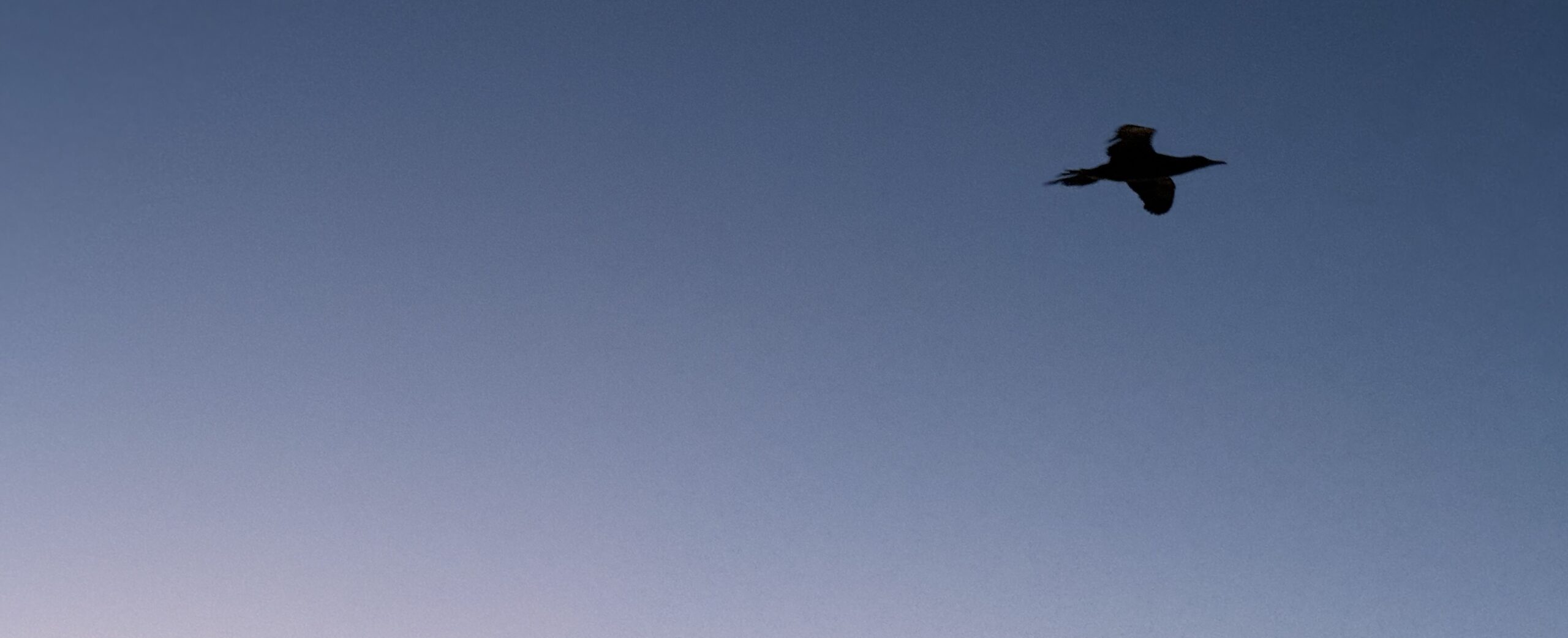
Early on the morning of 1 September we decided to slow Flyer down to allow us to arrive in the SF bay during daylight hours the following day. This whole way we saw minimal traffic, only the occasional fishing vessel on the horizon or cruise ship returning to SFO. The day cleared to become one of the more beautiful sailing days I can remember. Large following seas, clear skies, and a stiff breeze of 22-28 knots from behind. The albatrosses and porpoises also found it agreeable and joined along! As the breeze built we dropped the main and sailed under reefed genoa alone with boat speeds between 7-9 knots. Champagne sailing, as they say.
01 September – I was fortunate enough to snap a grainy photo of a rare midnight sighting of Pelle the cat in the doghouse. That’s the moon through the window.
All this while we didn’t have much of a plan for our time in the SF bay other than rebuilding the seawater line to the shaft-seal system and seeing some family, so it was a timely delight to reconnect with an old family friend who offered to put us up at the Sausalito Yacht Club after our arrival. He said we could tie to the dock or a mooring ball, both of which sounded preferable to the downtown marinas of SF proper, and that he’d meet us at the dock to assist us.
The morning of 2 September dawned with not much wind, but the welcome sight of the Marin Headlands and Bolinas Bay. By 0700 we raised the mainsail and unfurled the genoa in the hopes that the Golden Gate would deliver some sailing conditions for our arrival.
2 September – Photographer James on the bow approaching the Golden Gate.
And deliver it did! A steady building SW’ly breeze turned into a westerly which then turned into a full gale by the time we rounded the Point Cavallo on our way to Sausalito.
From our vantage point under the Bridge we could see fingers of breeze touching down to the north, and it appeared much stronger than the 15 knots of breeze that accompanied us under the main span.
2 September – Trying to figure out where we were going and what the Bay had in store for us…2 September – Flyer under mainsail only as we approached the gale force conditions beneath the Marin Headlands.
As we rounded up north past the Golden Gate Bridge the breeze built from 15 knots quickly to around 25. We set about making Flyer ship-shape for arrival, furling our sails, coiling our lines, and preparing fenders and dock lines. When we were around a mile from the Sausalito ferry dock the breeze spiked to 40. The mainsail was down by this point, engine was on, and Flyer was pushing her way north through it all. The SuperWind generator – our wind turbine that generates electricity for the boat mounted just behind the helm – was spinning so fast it would ‘speed wobble’ with an awful roaring sound as the gusts reached 50 knots. It was quickly evolving into a memorable arrival.
2 September – Thankfully we had 3 hands on the dock helping to secure us. The breeze was blowing Flyer off the dock so hard that even with a close approach she fell off to leeward quickly. We worked the boat forward and reverse against the dock lines to snug her up.
Our plan was to approach the dock from the north so if things devolved in our docking attempt we could go back out into the bay to regroup and not be forced into the tight, shallow anchorage just to the north. The dock was directly upwind, so we’d be pushed off of the dock with considerable force by the wind, forcing us to approach the dock with speed to keep from drifting off.
We maneuvered Flyer through the improbably tight mooring field to the east of Sausalito Yacht Club, and came in to the dock with force, making a sharp turn to port as the bow neared the edge. Lines were thrown to our new friends, curses were said, and eventually the lines made their way to the cleats. By this time Flyer was already 10 feet off the dock, but we had 3 lines secured ashore.
The forces on the dock lines were immense as we worked Flyer forward and aft with the engine, bringing her closer to the dock each time. Eventually we rigged more lines to the dock, profusely thanked our new (and essential!) friends, and made her secure. Our anemometer at the dock was reading a solid 35 knots with gusts into the high 40s. In my mind I was already placing an order for 3/4” double braid dock lines (our current ones are only 5/8”!).
2 September – Safely tied up at the Sausalito Yacht Club with a solid 35 knot westerly trying its best to push us off the dock. 02 September – Gusts approaching Sausalito and on the dock itself reached 50 knots
Family and friends welcomed us at the dock – what a way to arrive! We quickly learned this was a surprise gale – not the usual ‘Sausalito Hurricane’ that typically develops as the building sea breeze drops down the leeward side of the Marin Headlands. The wind stuck around all day and didn’t seem to deter the Sausalito YC junior program from sending its team out (in smaller boats) to give it a go.
We capped the adventure south with a big lunch at the Spinnaker, a Sausalito mainstay overlooking the mooring field and Flyer at dock with the city of San Francisco in the background. We were happy to have arrived but sad to see Cameron leave- it was a total delight to have him aboard and we are all still in disbelief that he’d elect to join us not once but twice on this 3 hour tour south. It takes a certain kind of soul to not only tolerate this family but seem to enjoy themselves all the while!
2 September- Flyer at the Sausalito Yacht Club dock with the SF Ferry just beyond us. This was an ideal launching pad for our time in the Bay and we’re so thankful to the SYC and our good friend Dick Enersen for putting us up here.